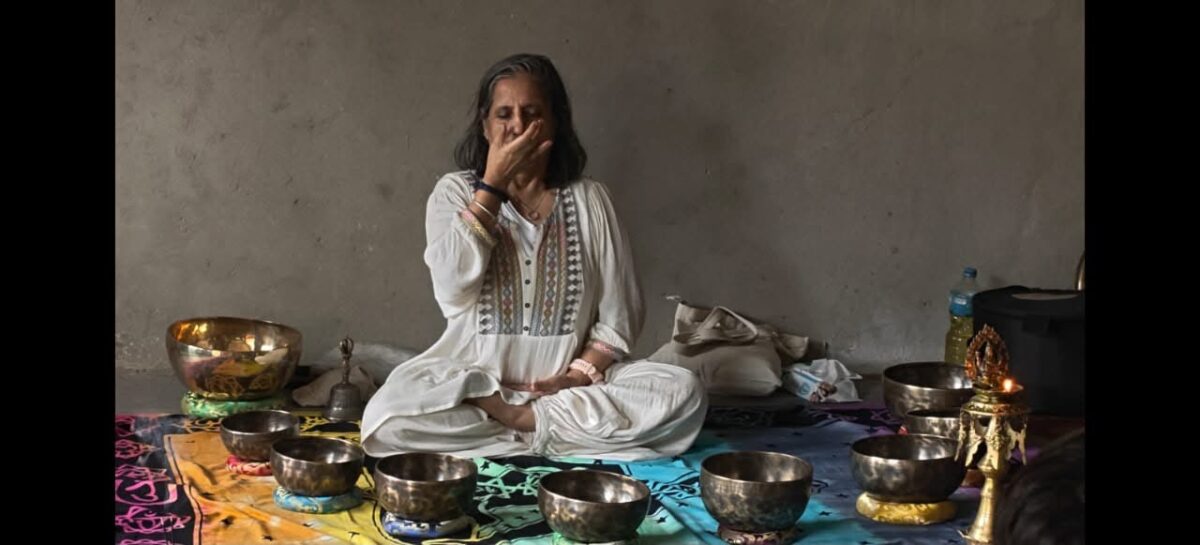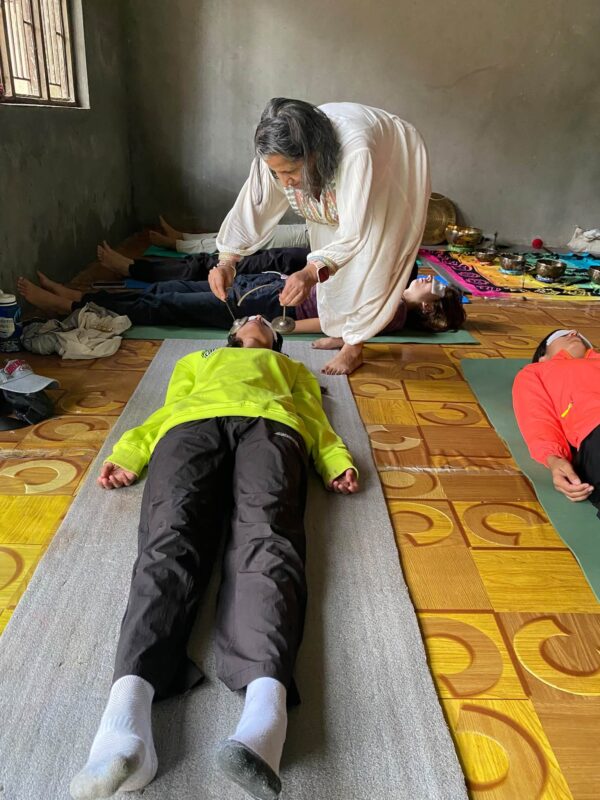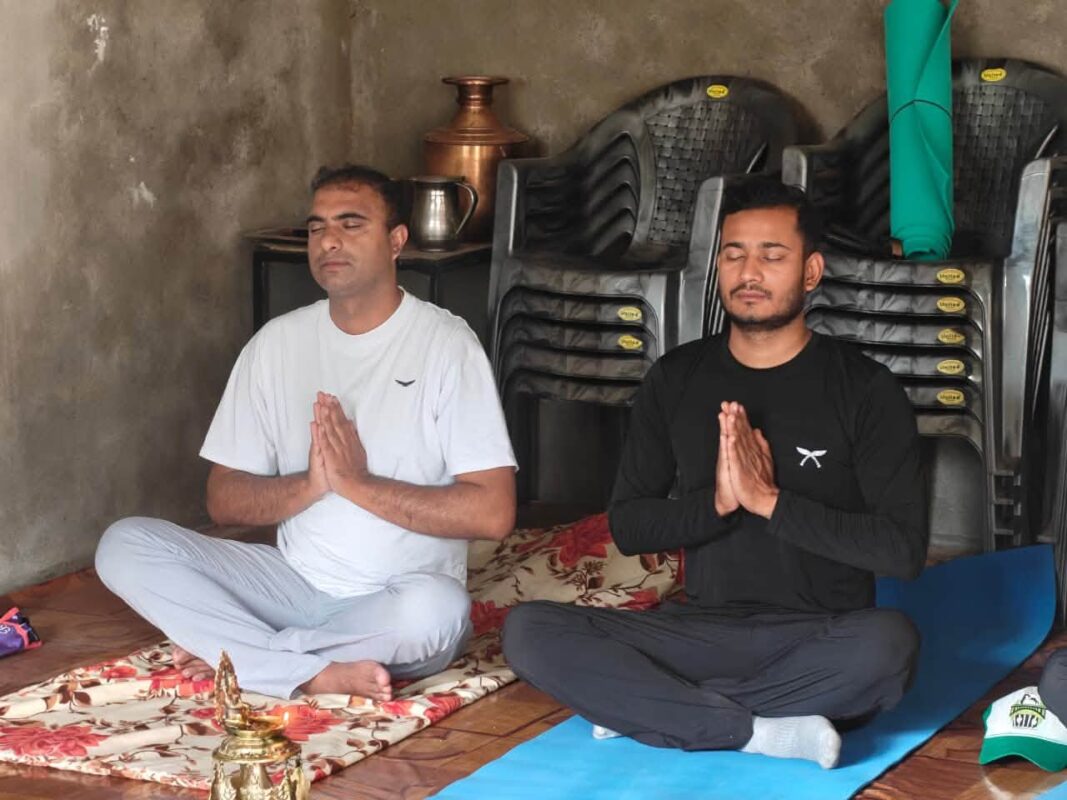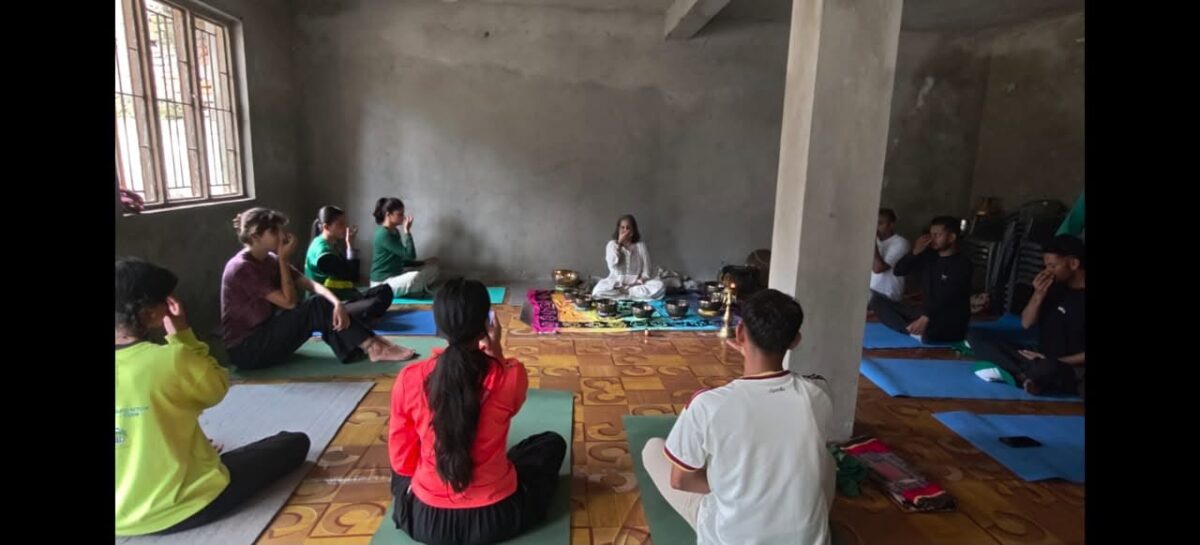
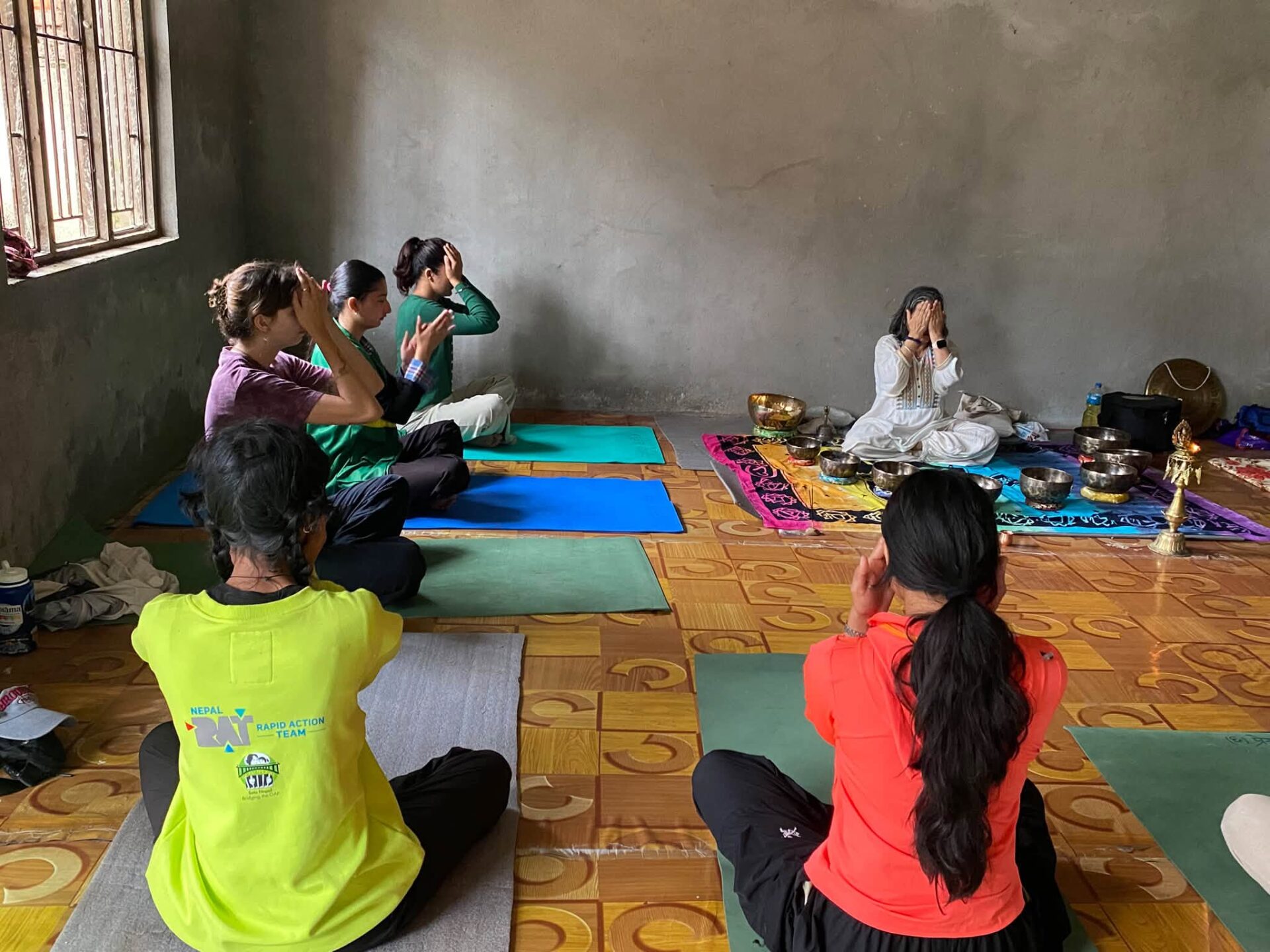
When a disaster hits, the first response is usually food, shelter and relief supplies. But the emotional toll of loss, fear and uncertainty can last long after the water has gone. In post-disaster settings, caring for emotional well-being is as important as providing tangible support. As part of our Mental Health and Psychosocial Support (MHPSS) work in flood-affected Nuwakot, SETU Nepal conducted two community-level Sound Healing sessions, one for volunteers supporting affected communities and another for community women and school teachers.
Prolonged stress affects those who have lost homes and livelihoods, and also the people who show up to help them. Volunteers often put others’ needs before their own, while women and teachers play a central role in holding families and children together during difficult times. The sessions created a safe and peaceful space for participants to pause, breathe, relax and reconnect. Through the calming effect of sound, they could set down some of the weight they had been carrying and find a moment of rest, which helped them cope with prolonged stress and difficult experiences.
After the sessions, participants shared feelings of deep relaxation, peace and joy. For many, it was a rare moment of calm after a long and demanding period. Healing is not only about recovery. It is also about creating safe spaces where communities can breathe, connect and heal together.
SETU Nepal will continue to include mental health and psychosocial support in our disaster response, because rebuilding lives means caring for hearts and minds as well as homes.